Gen Z employeethis phrase has become central to a viral conversation online after a young professional firmly refused to put work above a family tragedy. A WhatsApp chat between a Gen Z worker and his manager is now circulating across social media, with thousands applauding the employee for taking a stand against what many describe as India’s deeply rooted toxic work culture. The incident has become a powerful example of how younger generations are pushing for boundaries, empathy, and healthier workplace expectations.
Gen Z employee A Viral Chat That Exposed a Serious Problem
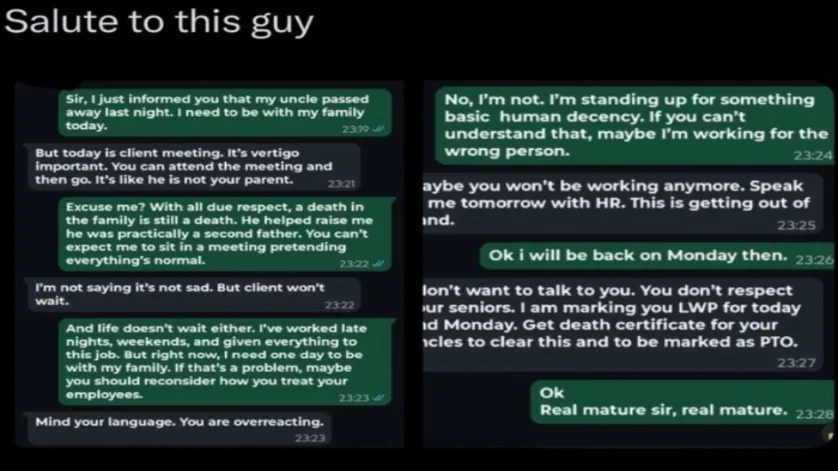
Gen Z employee The controversy began when the employee informed his manager that he had suffered a personal loss—his uncle had passed away the previous night. Naturally, he requested time off to be with his grieving family. Instead of responding with compassion, the manager insisted that the employee attend an upcoming client meeting first, stating that the deceased was “not your parent,” implying that the loss was not significant enough to require immediate leave.
Gen Z employee The insensitive reply shocked many online. However, what truly fueled the viral response was the young employee’s calm yet assertive reply. He explained that his uncle had played a major role in raising him and that “a death in the family is still a death.” He made it clear that pretending to function normally during a client meeting while processing grief was unreasonable.
Standing Up for Boundaries and Respect
The Gen Z worker further reminded his boss that he had consistently worked beyond regular hours—late nights, weekends, and during peak deadlines—always showing commitment. Yet when he needed just one day to cope with personal loss, the manager refused empathy.
He told his boss directly that such treatment was unfair and lacked “basic human decency,” a line that resonated strongly with internet users. The employee also pointed out that if asking for a single day to mourn was seen as disrespect or overreaction, then perhaps the problem lay in the work environment itself, not in his request.
Gen Z employee
Manager Escalates the Situation
Rather than reflect, the manager responded with hostility. He accused the employee of being disrespectful, declared the situation “out of hand,” and threatened HR action. He even demanded a death certificate and marked the day as “leave without pay,” along with the following Monday.

Many online considered this response not just unprofessional but cruel. The manager’s messages showcased a rigid and outdated mindset—one focused solely on productivity, not on people.
Internet Reactions: Praise for the Employee, Criticism for the Boss
Gen Z employee Once the screenshots reached X (formerly Twitter), reactions poured in. “Only Gen Z can change the toxic Indian work culture,” the uploader wrote—and thousands agreed. Users called the employee brave, balanced, and emotionally intelligent. They appreciated how he maintained respect while defending his mental and emotional boundaries.
Several users labeled the boss’s behavior as “red flag leadership,” highlighting how such attitudes contribute to burnout, high attrition, and declining employee well-being. Many others said they hoped this incident encourages companies to rethink their policies around bereavement, empathy, and humane management.
Why This Incident Matters
This viral exchange goes beyond a single argument. It reflects a generational shift that India’s workforce has been experiencing:
1. Gen Z values mental health and boundaries
They are unwilling to normalize overwork and emotional neglect for the sake of loyalty to a job.
2. Toxic managerial behavior is increasingly being called out
In the digital age, employees are more vocal and less afraid of questioning harmful practices.
3. Empathy at the workplace is becoming non-negotiable
Companies that fail to evolve risk losing talent and public respect.
4. Workplaces must adapt to changing expectations
The incident acts as a reminder: productivity should never come at the cost of humanity.
A Wake-Up Call for Employers
The story of this Gen Z employee isn’t just a viral moment—it’s a wake-up call. Employees today expect fairness, understanding, and dignity. As more stories like this surface, it becomes clear that India’s younger workforce is actively reshaping the meaning of professionalism. And perhaps that change is long overdue.
Read hinpi.in